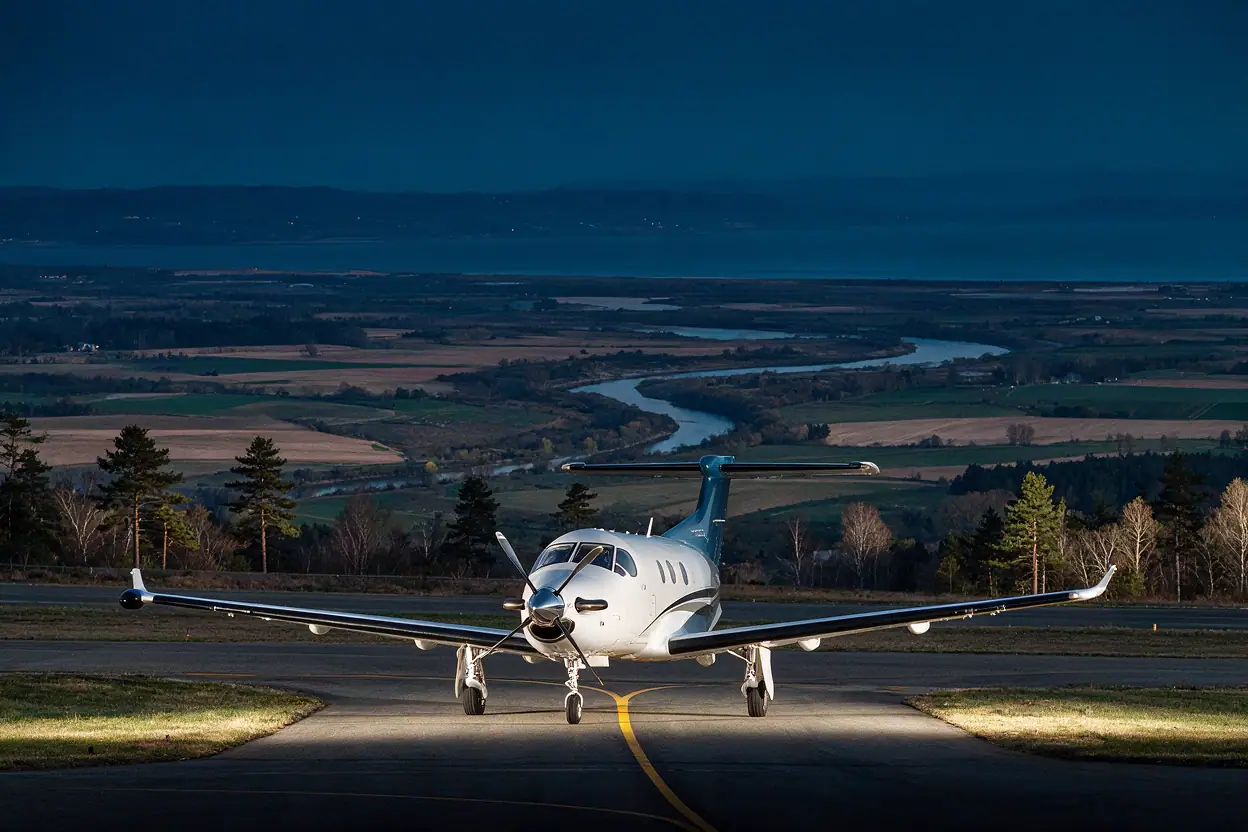
Private flight Los Angeles to San Francisco
A private flight Los Angeles to San Francisco covers 279 nautical miles. A turboprop makes the hop in 1h 17m, with estimated one-way prices from $3,000 to $4,500. That figure is an estimate, not a booked quote.
- Start
- Route list
- Los Angeles to San Francisco
- 279 nm321 sm
- 1h 17mturboprop duration
- $3,000–$4,500single-leg estimate
Los Angeles to San Francisco private jet prices by plane
A private jet flying Los Angeles to San Francisco covers 279 nautical miles in 1h 17m aboard a turboprop, with a one-way estimate of $3,000–$4,500.Below are the five classes that can fly this 279 nm route nonstop, with travel time and estimated one-way price ranges. The turboprop and light jet bracket the low end; the midsize, super-midsize and heavy jets shorten the flight marginally but raise the price. The turboprop and light jet bracket the low end of the Los Angeles to San Francisco price range. Use the ranges to compare, then request a quote for a specific date.
| Class | Air time | One-way estimate | Notes |
|---|---|---|---|
| Turboprop | 1h 17m | $3,000–$4,500 | Best fit |
| Light jet | 0h 59m | $4,000–$6,000 | Nonstop |
| Midsize jet | 0h 58m | $5,200–$8,000 | Nonstop |
| Super-midsize jet | 0h 55m | $7,200–$10,000 | Nonstop |
| Heavy jet | 0h 55m | $9,500–$14,500 | Nonstop |
Figures cover the whole aircraft, not each seat, and exclude federal excise tax and segment fees. Time in the air covers taxi, climb and descent.
Airline prices vs charter, Los Angeles to San Francisco
Airline figures are the lowest fares Google Flights displayed for a single traveler on Dec 9, 2026 (verified Nov 15, 2026); the charter line is our estimate covering the whole aircraft. For 8 travelers, domestic first tickets total about $1,232, versus $3,000–$4,500 for the entire turboprop.
| Choice | Airline / aircraft | Hours | One-way estimate | Seat share |
|---|---|---|---|---|
| Standard cabin | Frontier · nonstop | 1h 28m | $19 | $19 |
| Domestic first | American · nonstop | 1h 35m | $154 | $154 |
| Turboprop | Entire aircraft, max 8 seats | 1h 17m | $3,000–$4,500 | $380–$560 |
Airline ticket prices shift daily and don't cover bags past the fare's limit; the per-seat charter number presumes all seats are occupied.
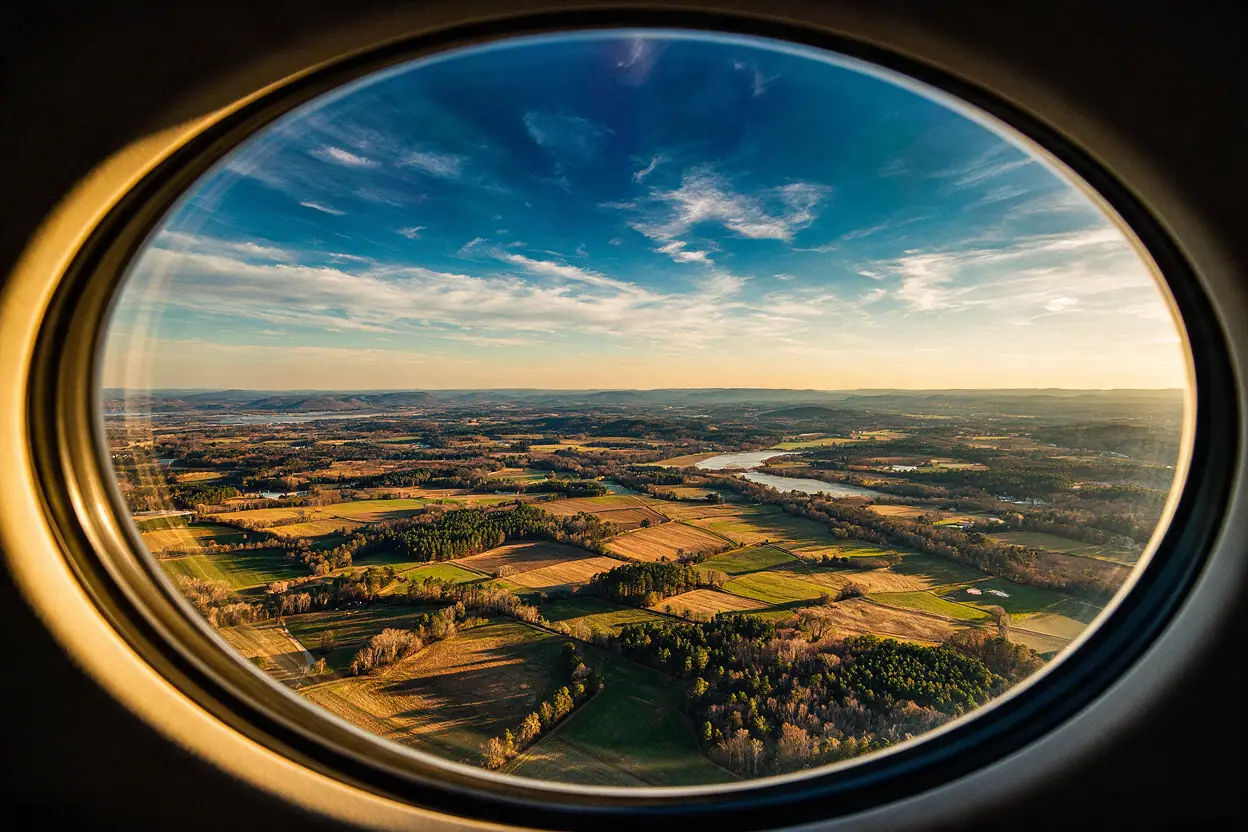
Leaving Los Angeles
You can start this trip from Van Nuys (KVNY, 8,001 ft runway), Hollywood Burbank (KBUR, 6,886 ft) or Los Angeles International (KLAX, 12,894 ft). Van Nuys Airport's 8,001 ft runway and Burbank's 6,886 ft strip both handle the turboprops commonly used on Los Angeles to San Francisco flights. Which one you use changes your drive and your departure time more than it changes the flight. If you are starting near the Valley, then Van Nuys usually cuts the ground time; if you are closer to the coast, then a different field may suit.
KLAX is the long-runway option at 12,894 ft, but it is also the busiest of the three. If your schedule puts you at Los Angeles International in a peak hour, then allow extra time for surface movement before your departure slot. Most travelers on this route pick the field nearest their home or hotel; the flight time to San Francisco is essentially the same from each.
Arriving in San Francisco
San Francisco International (KSFO) has an 11,870 ft runway, and Oakland San Francisco Bay (KOAK) has 10,520 ft; both can take every class listed on this page. San Francisco International's 11,870 ft runway and Oakland's 10,520 ft strip give the turboprop and every jet class a comfortable margin on arrival. Where you land often comes down to which side of the bay you need to be on. Oakland puts you closer to the East Bay; SFO is the better fit for the city and the Peninsula.
Summer fog is the one seasonal factor that regularly affects arrivals into San Francisco. If marine layer delays stack up at San Francisco International, then Oakland is the practical alternate for a 279 nm hop like this one. Both fields are served by the turboprops and jets used on this route, so an alternate does not force a change of aircraft class.
| Field | Code | Runway |
|---|---|---|
| San Francisco International Airport | KSFO / SFO | 11,870 ft |
| Oakland San Francisco Bay Airport | KOAK / OAK | 10,520 ft |
| Van Nuys Airport | KVNY / VNY | 8,001 ft |
| Hollywood Burbank/Bob Hope Airport | KBUR / BUR | 6,886 ft |
| Los Angeles International Airport | KLAX / LAX | 12,894 ft |
When Los Angeles to San Francisco prices
Demand on Los Angeles to San Francisco rises around weekday morning and evening commute hours and during major Bay Area events, and that demand shows up in the quote. If you need a Friday afternoon departure from Los Angeles to San Francisco, then expect the upper end of the $3,000 to $4,500 turboprop estimate. Midday and weekend departures are usually easier to price. The 279 nm distance is short enough that aircraft repositioning, not fuel, is often the largest price variable.
Booking ahead helps most when your dates are fixed. If your travel falls on a holiday week or a convention week in San Francisco, then locking in the aircraft early gives you the widest choice of turboprops and light jets. For flexible dates, shifting by a day can move you from a heavy jet quote to a turboprop one. Remember that all prices here are estimates; a firm quote depends on the date, the aircraft and the airports you choose.
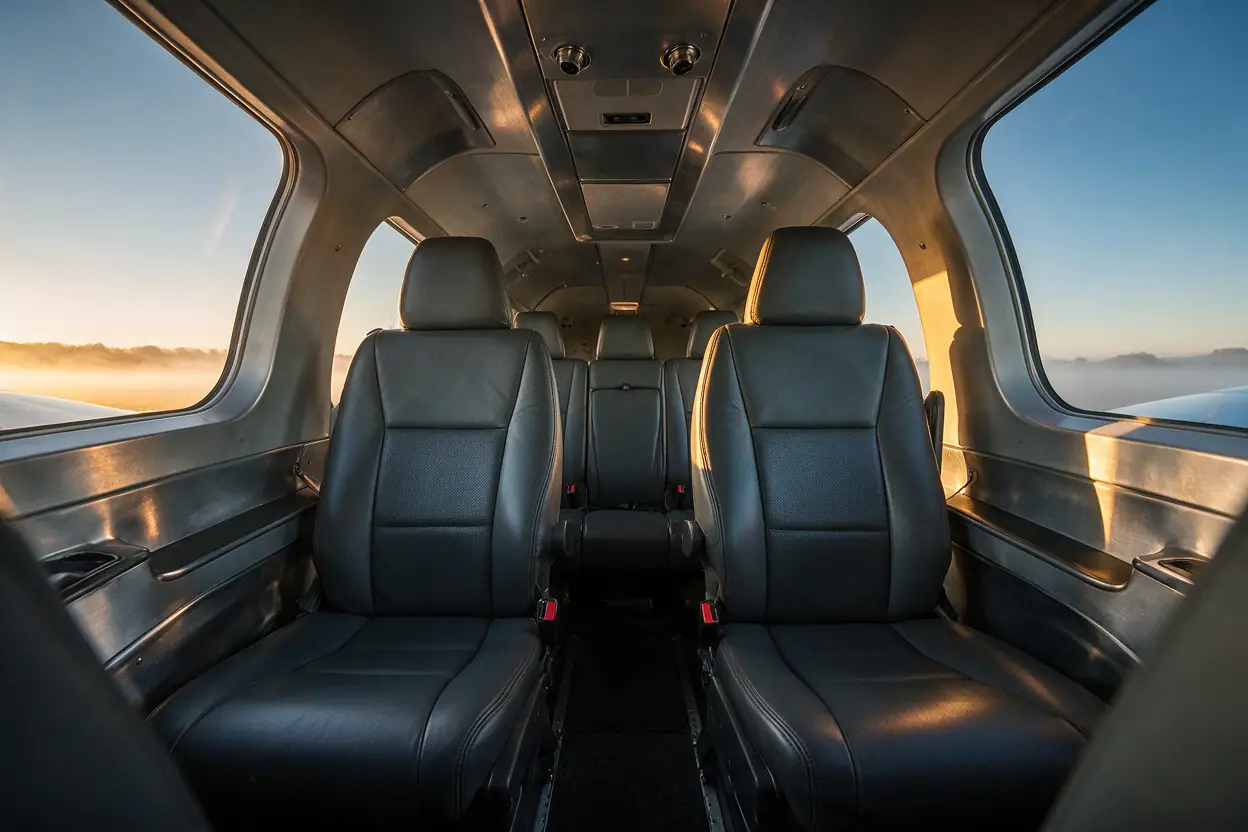
Why this turboprop suits the route
For 279 nm, the turboprop is the right fit: it makes the trip nonstop in 1h 17m and keeps the estimated price between $3,000 and $4,500. The Pilatus PC-12 NGX and Daher TBM 960 both have 6 seats and far more range than this leg needs, so the airplane is not working hard. A turboprop covers the 279 nm leg from Los Angeles to San Francisco in 1h 17m, the slowest but cheapest class on the route. At this distance the time penalty is small, which is why the turboprop is the recommendation.
The alternatives make sense for different reasons. The light jet saves 18 minutes over the turboprop, flying the route in 0h 59m at an estimated $4,000 to $6,000. The midsize jet shaves one more minute (0h 58m) and starts at $5,200. If you value cabin stand-up height on the San Francisco leg, then the super-midsize at 0h 55m and $7,200 to $10,000 buys space more than speed. The heavy jet also takes 0h 55m but costs $9,500 to $14,500, so on a 279 nm hop you are paying for cabin, not for time saved.
Pilatus PC-12 NGX
- 6 seats
- 290 kt cruise
- 1,800 nm range
Cabin 4 ft 10 in tall, 16 ft 11 in long. Baggage 40 cu ft.
Daher TBM 960
- 6 seats
- 330 kt cruise
- 1,730 nm range
Cabin 4 ft tall, 13 ft 3 in long. Baggage 32 cu ft.
Charter routes like Los Angeles to San Francisco
These 6 private jet routes span 158 to 359 nautical miles, and one-way turboprop estimates run from $2,200 to $5,500.
FAQs on this city pair
How long is a private flight Los Angeles to San Francisco?
The route covers 279 nautical miles (321 statute miles). A turboprop flies it in 1h 17m, a light jet in 0h 59m, and the midsize, super-midsize and heavy jets in 0h 58m to 0h 55m. All five classes make the trip nonstop. The differences in flight time are small at this distance, so the choice of aircraft is more about cabin and price than about speed.
What does a private flight Los Angeles to San Francisco cost?
Estimated one-way prices start at $3,000 to $4,500 for a turboprop. A light jet runs $4,000 to $6,000, a midsize $5,200 to $8,000, a super-midsize $7,200 to $10,000, and a heavy jet $9,500 to $14,500. These are estimates, not firm quotes. The final figure depends on your date, the aircraft available and the airports you use at each end.
Which aircraft is best for this 279 nm route?
The turboprop is the best fit. It flies the route nonstop in 1h 17m at the lowest estimated price, $3,000 to $4,500. The Pilatus PC-12 NGX and Daher TBM 960 both seat 6 and have ample range for 279 nm. If you want a faster jet, the light jet saves 18 minutes for an estimated $4,000 to $6,000. On this distance, the turboprop gives the best balance of time and cost.
Which airports can I use at each end?
In Los Angeles, Van Nuys (KVNY) has an 8,001 ft runway, Hollywood Burbank (KBUR) 6,886 ft, and Los Angeles International (KLAX) 12,894 ft. In the Bay Area, San Francisco International (KSFO) has an 11,870 ft runway and Oakland (KOAK) 10,520 ft. All five classes on this page can use these fields. Your choice usually comes down to which airport is closest to your start and end points.
Can I do a same-day round trip Los Angeles to San Francisco?
Yes. At 279 nm each way, a turboprop flies the leg in 1h 17m, so a same-day return is practical. The light jet takes 0h 59m each way. Book both legs as one request so the aircraft stays with you rather than being released after the first flight. A round trip also avoids a separate one-way positioning charge, which can affect the estimate.
When should I book to get the best price on this route?
Book as early as your plans allow, especially for weekday morning or evening departures and for weeks with major events in San Francisco. Those periods push quotes toward the top of each range, such as $4,500 for a turboprop. If your dates are flexible, shifting by a day can move you to a lower-cost aircraft class. All figures are estimates until you request a quote for your specific date.