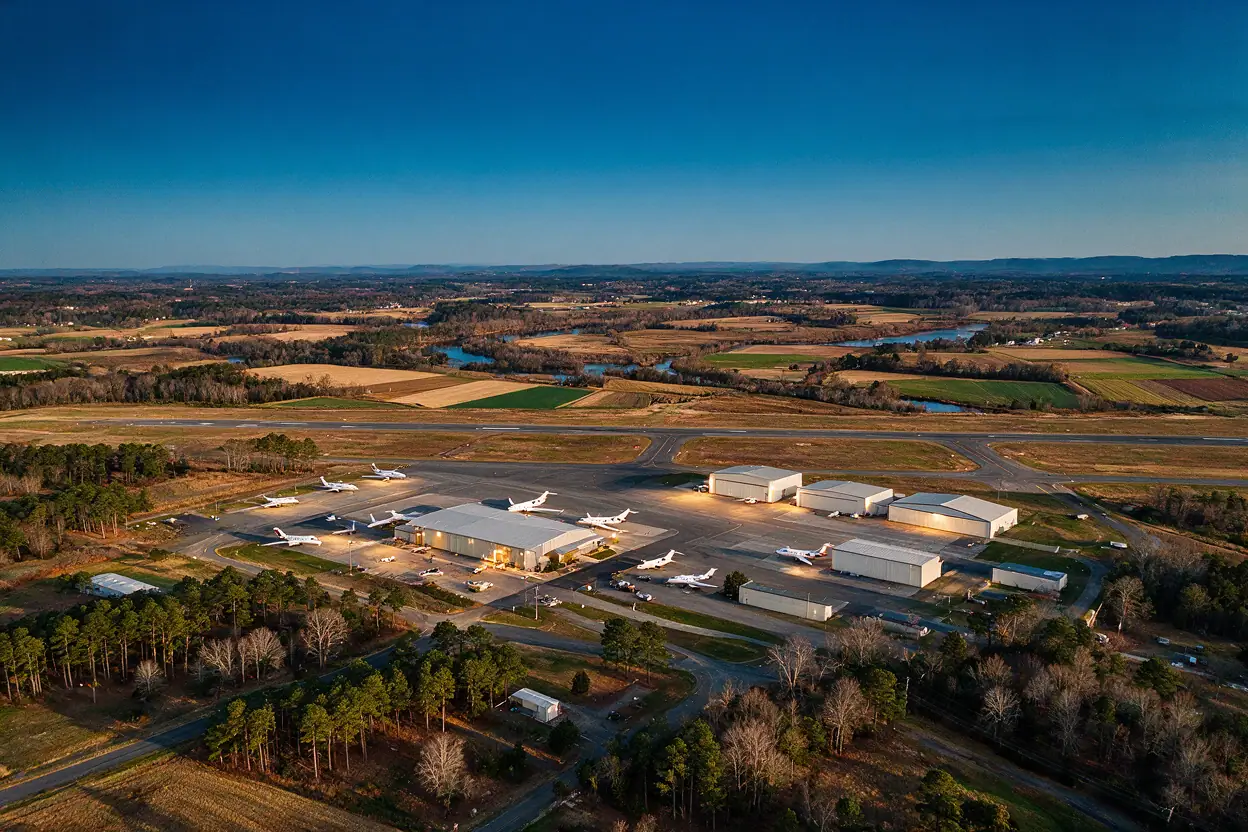
Private Flight Harry Reid at LAS
A private flight Harry Reid travelers book most often is a midsize or super-midsize jet into Las Vegas. The field sits at 2,181 ft with a 14,835 ft runway, so most charter jets have margin to spare. Heat, not runway length, is the constraint worth planning around.
- KLAS · LASairfield codes
- 2,181 ftfield height
- 14,835 ftlongest strip
- 0 mitoward New York
Harry Reid International Airport, KLAS on the flight plan and LAS on your ticket, is the main commercial field in Las Vegas and the one most charter travelers mean when they search for a private flight Harry Reid. Private jets use the same runways and separate FBO terminals here, which is why the field shows up on so many charter itineraries. The airport's IATA code is LAS and its ICAO code is KLAS.
The numbers that matter for aircraft selection start with elevation and pavement. The field sits at 2,181 ft above sea level and the longest runway reaches 14,835 ft, a length that keeps heavy jets and long-range types comfortable in most conditions. A 14,835 ft longest runway gives even hot-day departures room to work, and that is unusual for a desert airport at this elevation.
Where Harry Reid separates itself from Teterboro or Van Nuys is heat. Summer afternoons push density altitude toward 5,800 ft in July and as high as 6,300 ft in the year's hottest stretch, which is a real planning figure for turboprops and light jets. Charter jets and turboprops flying into Harry Reid in summer need a density altitude check, not just a runway length check. Winter is the opposite story, with January highs near 57 F and density altitude around 2,600 ft.
Runways and aircraft fit at LAS
A private flight Harry Reid arriving or departing uses a runway system built for widebody airliners, so charter jets rarely face a length problem at LAS. The field's 14,835 ft longest runway is longer than what most private jets need, and the 2,181 ft elevation costs some performance but not much on a runway this size. Long-range jets and midsize jets both fit comfortably at Harry Reid, and light jets do too outside the hottest summer hours. Where a light jet or turboprop operator may ask for a weight cut is a July or August afternoon departure to a distant destination, because the combination of heat and a full fuel load affects climb performance. If your trip is a short hop to Los Angeles or Phoenix, then runway length and heat rarely change the aircraft you can book. If you are flying nonstop to the East Coast in August, then the operator may quote a fuel stop or a larger jet.
| Runway | Length | Width | Pavement |
|---|---|---|---|
| 08L/26R | 14,835 ft | 150 ft | Asphalt |
| 08R/26L | 10,526 ft | 150 ft | Asphalt |
| 01L/19R | 9,770 ft | 150 ft | Concrete |
| 01R/19L | 9,769 ft | 150 ft | Asphalt |
Getting to and from the airport
Harry Reid sits immediately east of the Las Vegas Strip, so the drive from the FBO to most Strip resorts is short and does not require the freeway. Charter travelers landing at Harry Reid reach the Strip faster than commercial arrivals, since the FBO side avoids the main terminal crowds and curbside traffic. If you are heading to downtown Las Vegas or Henderson, then allow more time and confirm the route with your ground provider before departure. If your trip is international, then plan for CBP clearance at the FBO and give your provider the passport details ahead of time.
Private jet routes via Harry Reid
These 6 private jet routes span 199 to 2,129 nautical miles, and one-way light jet estimates run from $4,000 to $36,000.


FBOs and ground handling at Harry Reid
Two FBOs serve general aviation at Harry Reid: Atlantic Aviation and Signature Aviation. Both handle private flight Harry Reid arrivals and departures, and your charter provider will confirm which one your aircraft is assigned to before you land. Atlantic Aviation and Signature Aviation both handle charter jets at LAS, so ground time and crew facilities are comparable between them. If your schedule includes a tight connection to a commercial flight, then plan the transfer between the FBO and the main terminal in advance, since they sit apart and TSA screening applies at the commercial side.
Trips this airport suits
- Las Vegas Strip and convention trips where the FBO is closer to your hotel than the commercial terminal
- West Coast and Mountain West hops from Los Angeles, Phoenix, Denver or San Francisco
- Long-range nonstops to the East Coast and Midwest on midsize and larger jets
- Winter and spring travel when density altitude is low and every aircraft type performs at full specification
| Cabin size | Runway requirement | Local |
|---|---|---|
| Turboprop | 3,300 ft+ | No limits |
| Light jet | 4,000 ft+ | No limits |
| Midsize jet | 5,000 ft+ | No limits |
| Super-midsize jet | 5,200 ft+ | No limits |
| Heavy jet | 5,600 ft+ | No limits |
Weather and density altitude by season
Density altitude at Harry Reid climbs from roughly 2,600 ft in January to a peak near 6,300 ft in the hottest month, using the airport's hottest-month average high plus 8 F as the basis rather than a fixed temperature. July is the month most charter operators flag, with a July density altitude of 5,800 ft and highs averaging 105 F. July density altitude near 5,800 ft is the number to quote your operator, because it is what determines whether a light jet needs a weight restriction.
The shoulder months are gentler. April runs about 4,100 ft and October about 4,200 ft, both comfortable for turboprops and light jets. Rain is rare year round, with wet days topping out at four in January and March. If you are booking a light jet or turboprop in June through September, then ask for the performance numbers at the forecast temperature for your departure hour. If you are flying a midsize or larger jet, then the summer heat is unlikely to change your routing.
| Period | Mean high | Days with rain | Density altitude |
|---|---|---|---|
| Jan | 57°F | 4 | 2,600 ft |
| Feb | 63°F | 3 | 3,000 ft |
| Mar | 70°F | 4 | 3,400 ft |
| Apr | 80°F | 2 | 4,100 ft |
| May | 87°F | 1 | 4,600 ft |
| Jun | 101°F | 0 | 5,500 ft |
| Jul | 105°F | 2 | 5,800 ft |
| Aug | 103°F | 2 | 5,600 ft |
| Sep | 95°F | 1 | 5,100 ft |
| Oct | 81°F | 2 | 4,200 ft |
| Nov | 66°F | 1 | 3,200 ft |
| Dec | 57°F | 2 | 2,600 ft |
FAQs on this airfield
How long is the longest runway at Harry Reid for a private flight?
The longest runway at Harry Reid International Airport is 14,835 ft, which is more pavement than almost any private jet needs for takeoff or landing. Combined with the field elevation of 2,181 ft, that length keeps midsize and large-cabin jets comfortable even on hot summer afternoons. Light jets and turboprops are the types most likely to face a weight limit in July and August rather than a runway limit.
What is the density altitude at LAS in summer?
July density altitude at Harry Reid averages about 5,800 ft, and the peak for the airport's hottest stretch reaches roughly 6,300 ft. That figure is based on the hottest month's average high plus 8 F, not a fixed extreme. For a light jet or turboprop, a 5,800 ft density altitude can mean a reduced fuel load or a shorter leg, so give your operator the departure hour when you request a quote.
Which FBOs handle charter jets at Harry Reid?
Two FBOs serve general aviation at LAS: Atlantic Aviation and Signature Aviation. Both accept private flight Harry Reid arrivals and departures and offer the usual crew and passenger facilities. Your charter provider assigns the FBO based on the aircraft and the operator's preference, so confirm the location before you arrange ground transport, since the FBOs are separate from the commercial terminal.
Is Harry Reid a port of entry for international charter flights?
Yes, Harry Reid functions as a port of entry, so international charter legs can clear customs here rather than at a diversion airport. If your itinerary starts or ends outside the US, then provide passenger passport details to your provider early and expect CBP processing at the FBO. If your trip is entirely domestic, then no customs step applies and you can go straight from the aircraft to your car.
What aircraft can I charter into Harry Reid in winter?
In winter, density altitude at LAS falls to about 2,600 ft in January with highs near 57 F, so every aircraft type performs close to its book numbers. Light jets, turboprops and large-cabin jets all operate without heat-driven restrictions. If your trip falls between November and March, then you have the widest choice of aircraft and the fewest performance compromises for a given budget.
How does LAS compare with other airports for a private flight?
Harry Reid's 14,835 ft runway is far longer than the 6,997 ft at Teterboro or the 8,001 ft at Van Nuys, which matters for long-range jets. What LAS shares with those fields is congestion and slot pressure at peak times. If your schedule is flexible, then a midday departure usually costs less than a Friday evening slot, and the aircraft choice is broader.