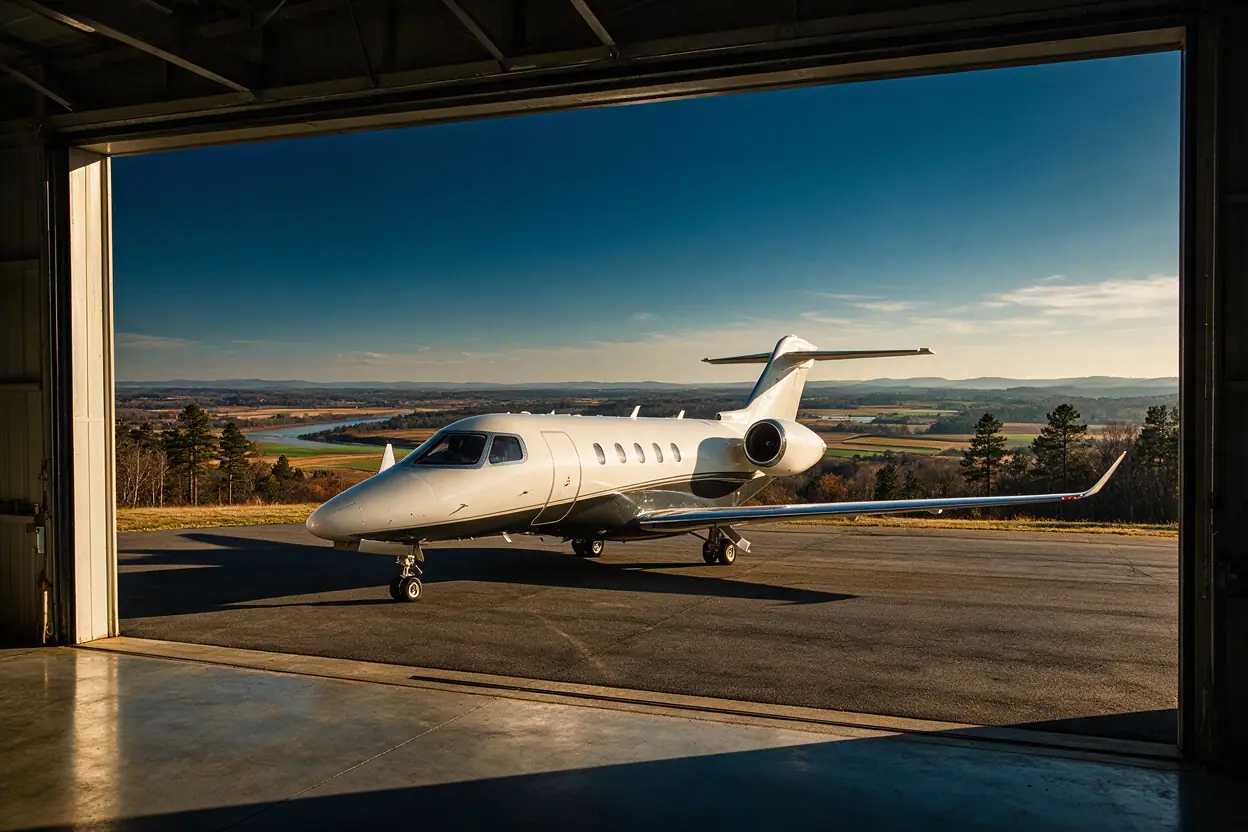
Private plane charter in Philadelphia
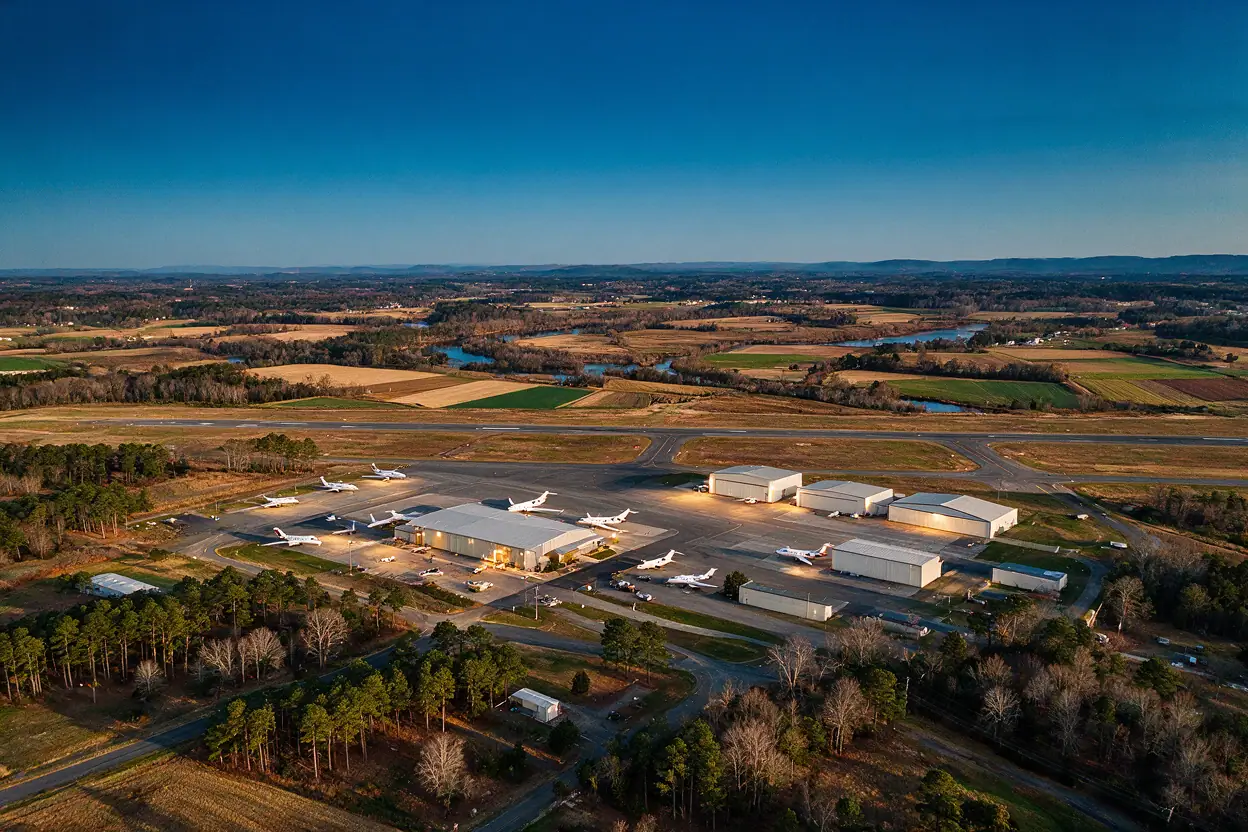
Private plane charter in Philadelphia typically departs from Northeast Philadelphia Airport (KPNE). KPNE offers a 7,000-foot runway at 120 feet elevation, suitable for turboprops and light jets. This field is about 12 miles from Center City, near I-95 and the Betsy Ross Bridge.
- Start
- Philadelphia
- 1airfield
- 0quoted routes
Northeast Philadelphia Airport (PNE) sits about 12 miles northeast of Center City, close to the Betsy Ross Bridge and I-95. The field has one runway of 7,000 feet at 120 feet elevation, enough for turboprops and light jets. For private plane charter in Philadelphia, KPNE is the most common departure point, with a single FBO and quick access from Center City. If you are heading to the Jersey Shore or New York, PNE keeps you out of the commercial terminals and their lines.
Peak density altitude at PNE reaches about 2,500 feet in the hottest month, still well within the performance envelope of a light jet. When summer heat pushes density altitude up, then a light jet may need a longer runway or a weight reduction before departure. Most Philadelphia departures head to Florida, the Carolinas, New England or Chicago, and a turboprop can cover many of those legs at lower cost. Longer transcontinental trips need a super-midsize or heavy jet, which may use a nearby larger field because of runway length.
Pricing in Philadelphia follows the aircraft class: a turboprop runs roughly $2,200 to $3,500 per hour, while a heavy jet runs $9,500 to $14,500 per hour. Choosing the smallest aircraft that meets your range and seat needs is the single biggest lever on a Philadelphia charter quote. If your group is four to seven people flying to Florida, then a light jet at $3,800 to $5,800 per hour usually costs less than a midsize. When your trip is under 300 nautical miles, a turboprop at 300 knots can be the most efficient choice.

Price a charter
Choose a route, travelers and bags to see the matching class, flight duration and a price range.
Conditions that affect Philadelphia
Philadelphia has wet days in every month, with a peak of 13 in July and a low of 8 in November, so weather can shift departure times. Because the airport sits near the Delaware River, then morning fog in spring and fall can delay early departures, so build a buffer into time-sensitive plans. Summer heat raises density altitude to about 2,500 feet at its peak, which matters for light jets on the longest runways. If your trip falls in July or August, then ask your provider how the aircraft performs on a hot afternoon. The field's single FBO handles arrivals and departures, and the drive from Center City is short, so ground logistics rarely add much time.
| Period | Mean high | Days with rain |
|---|---|---|
| Jan | 41°F | 10 |
| Feb | 45°F | 11 |
| Mar | 52°F | 11 |
| Apr | 63°F | 12 |
| May | 73°F | 11 |
| Jun | 82°F | 11 |
| Jul | 87°F | 13 |
| Aug | 85°F | 12 |
| Sep | 78°F | 10 |
| Oct | 67°F | 9 |
| Nov | 55°F | 8 |
| Dec | 46°F | 10 |
Which airports serve Philadelphia
How to charter a plane from Philadelphia
Define the mission before you call
Count passengers, bags and the longest leg. A family of four flying to Orlando fits a light jet; a group of nine with golf bags needs a midsize or super-midsize. Write down the airports you want and any time constraints.
Pick your departure field
Most flights leave from PNE, but a larger nearby field may be better for a heavy jet or an international leg. Confirm the runway length against your aircraft's requirement, especially on hot days when density altitude peaks near 2,500 feet.
Request quotes for specific aircraft
Ask for itemized estimates naming the aircraft class and hourly rate. Compare turboprop, light and midsize options side by side, then check the total for your round trip rather than the hourly figure alone.
Confirm documents and timing
For international legs, CBP processing at your arrival airport adds time. If your trip uses a commercial terminal, allow for TSA screening. Ask when the aircraft must be at the FBO and when your group should arrive.
FAQ
Which airport serves private plane charter in Philadelphia?
Northeast Philadelphia Airport (PNE) is the main field, with a 7,000-foot runway at 120 feet elevation and one FBO on site. It is about 12 miles from Center City and close to I-95. For larger aircraft or international departures, a nearby airport with a longer runway may be used, so confirm the field when you compare quotes.
What does a private plane charter in Philadelphia cost per hour?
Estimates range from roughly $2,200 to $3,500 per hour for a turboprop, $3,800 to $5,800 for a light jet, $5,200 to $7,800 for a midsize, $7,200 to $10,000 for a super-midsize and $9,500 to $14,500 for a heavy jet. These are estimates; the total depends on the route, date and crew time, so ask for an itemized quote.
Can a light jet handle summer departures from PNE?
Yes in most cases. Peak density altitude at PNE is about 2,500 feet, which is modest for a 7,000-foot runway. On the hottest afternoons, a light jet may face a weight limit on longer trips, so if your group is at the top of the cabin limit, then ask the provider to confirm performance for your date and destination.
How early should I book a charter from Philadelphia?
Aircraft availability in Philadelphia tightens around holidays and summer weekends, when wet days peak at 13 in July. For a specific aircraft class on a popular Florida route, starting the search early gives you more choices. If your trip is flexible, then off-peak dates can open up light jet and turboprop options that are not available at short notice.
What should I consider for international private plane charter in Philadelphia?
For international legs, CBP processing at your arrival airport adds time, so plan for it. If your trip uses a commercial terminal, allow for TSA screening. Also confirm the aircraft's range and the runway length at both ends, especially if you are flying a heavy jet from a field with limited runway.
How do I choose the right aircraft for my Philadelphia charter?
Match seats, range and runway to your mission. A turboprop carries 6-8 passengers up to 1,500 nautical miles at 300 knots, while a heavy jet carries 10-14 up to 4,000 nautical miles at 470 knots. For a four-person trip to Florida, a light jet at 430 knots and 1,400 nautical miles range is often sufficient.