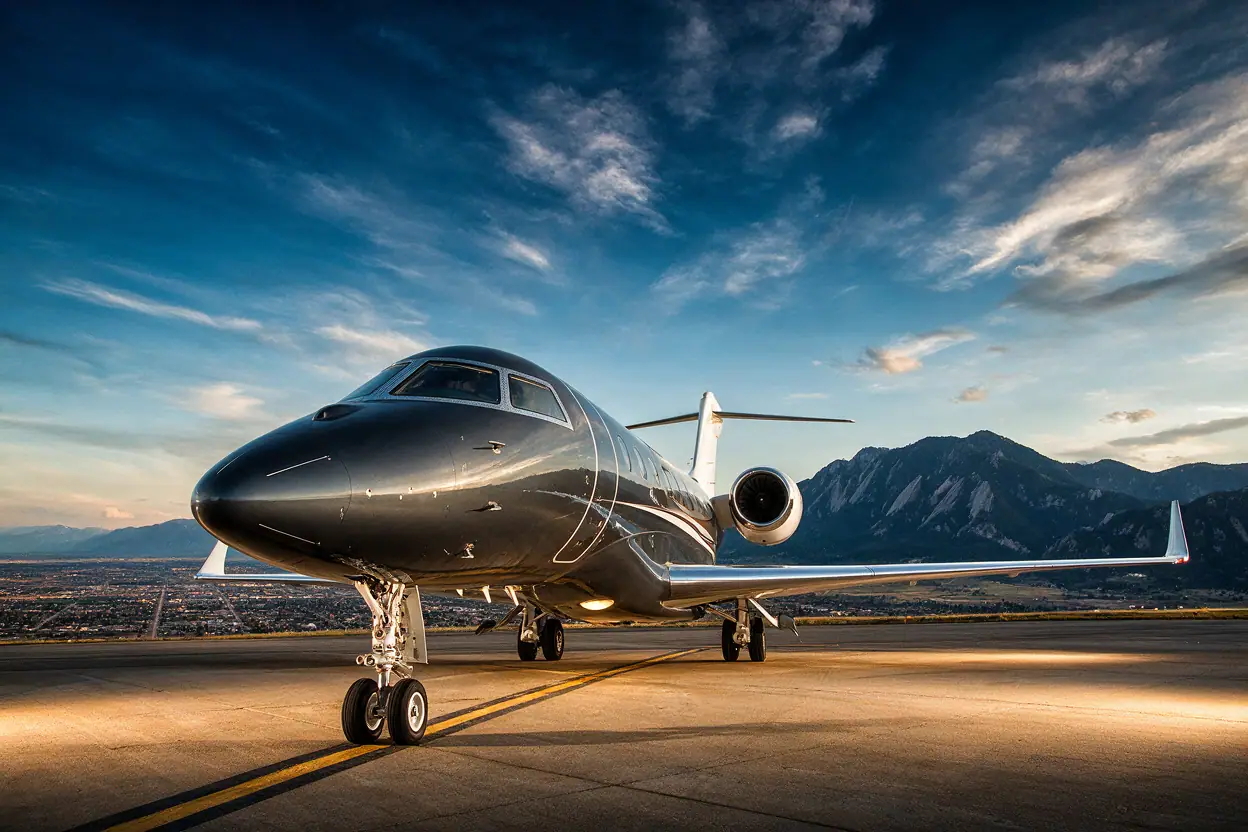
Private flight Denver aircraft
Private flight Denver travelers often use Centennial Airport's 10,001-foot runway. A light jet cruises near 430 knots and seats 4-7. Summer heat lifts density altitude near 9,200 feet.
- Start
- Denver
- 1airfield
- 0quoted routes
Denver's altitude shapes every aircraft decision. Centennial Airport (KAPA) sits at 5,885 feet, and on a hot July afternoon density altitude can climb to about 9,200 feet. That thinner air lengthens takeoff rolls and cuts climb rates, so a light jet that performs comfortably at sea level may need a longer runway or a lighter payload here. Turboprops and jets with strong high-altitude performance are the norm for local charter.
Most Denver charter legs are regional: ski trips to Aspen or Vail in winter, business hops to Dallas or Chicago, and mountain getaways in summer. Turboprops handle short runways and lower costs for 6-8 passengers, while light jets cover 4-7 seats on 1,400-nautical-mile trips. Midsize and super-midsize jets add cabin comfort and range when the route stretches past 2,000 nautical miles.
Pricing moves with aircraft class, not just distance. Turboprops run roughly $2,200 to $3,500 per hour, light jets $3,800 to $5,800, and heavy jets $9,500 to $14,500. Summer and ski-season demand tightens availability at Centennial's three FBOs, so booking a few weeks out helps. Quotes are estimates and vary with date, passenger count and one-way versus round-trip pricing.
Price a charter
Choose a route, travelers and bags to see the matching class, flight duration and a price range.
Denver airports at a glance
Centennial Airport (KAPA) is the main general aviation field south of downtown, and its 10,001-foot runway and three FBOs handle most local charter traffic. Centennial Airport's field elevation of 5,885 feet makes it one of the higher charter airports in the country, which matters for aircraft selection. Denver's climate swings from average highs in the low 40s in winter to near 88 F in July, and wet days peak at 12 in May. If your trip involves an international leg, then plan for CBP clearance at a port of entry rather than a small mountain field.
| Period | Mean high | Days with rain |
|---|---|---|
| Jan | 41°F | 5 |
| Feb | 41°F | 8 |
| Mar | 49°F | 8 |
| Apr | 59°F | 8 |
| May | 69°F | 12 |
| Jun | 83°F | 8 |
| Jul | 88°F | 6 |
| Aug | 87°F | 6 |
| Sep | 80°F | 6 |
| Oct | 67°F | 4 |
| Nov | 53°F | 5 |
| Dec | 46°F | 5 |
Which airports serve Denver
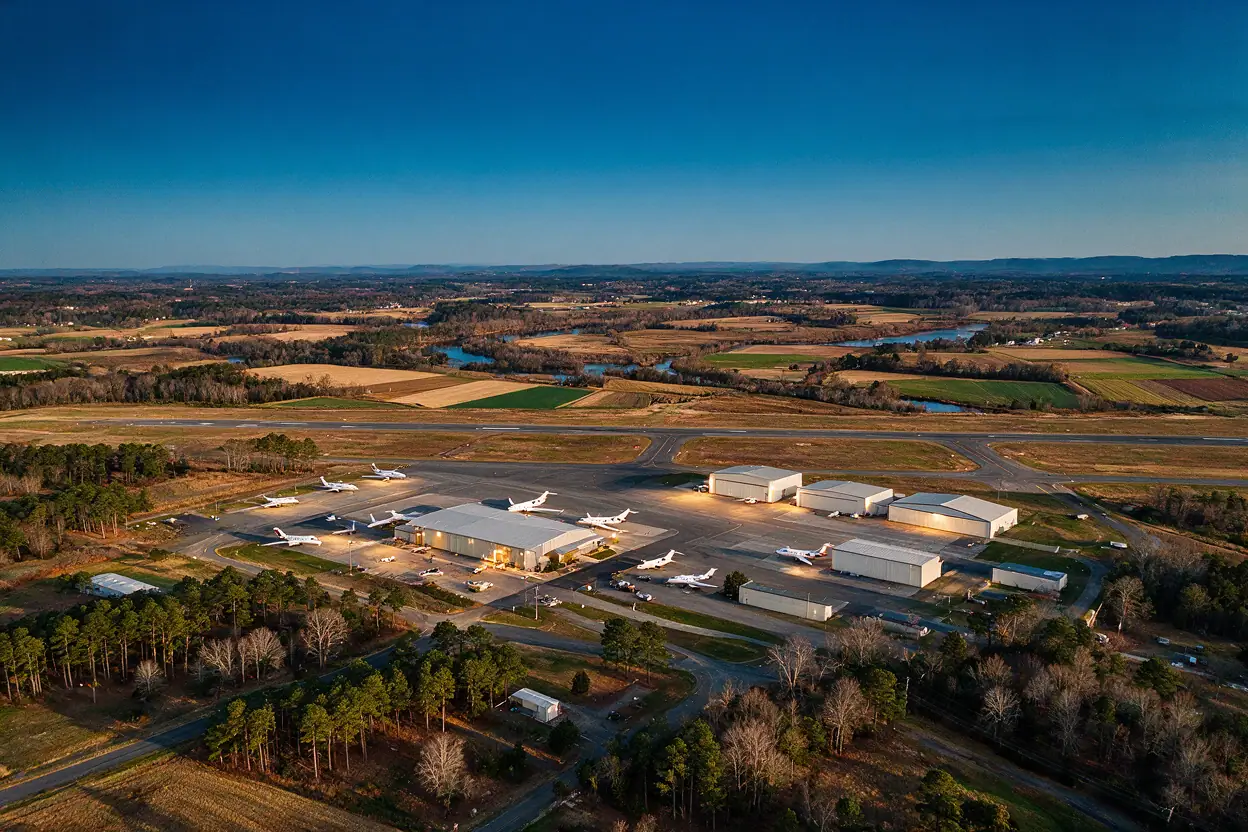
Arranging a private plane charter
Match the aircraft to the mission
Count passengers and bags, then estimate trip length. A turboprop suits 6-8 people on short regional hops, while a midsize jet carries 7-9 with more range. A light jet charter from Denver fits 4-7 passengers on trips up to 1,400 nautical miles.
Check runway and altitude performance
Centennial's 10,001-foot runway handles most jets, but summer density altitude near 9,200 feet can reduce payload. Ask whether the jet charter from Denver can depart at full seats on your date; if not, plan a lighter load or a different aircraft.
Compare quotes by the hour
Request itemized estimates that show hourly rate, flight time and fees. Turboprops start around $2,200 per hour, while heavy jets can reach $14,500 per hour. Prices are estimates, so confirm what each quote includes.
Book with season in mind
Ski weekends and summer travel tighten Denver availability. If your trip falls in July or during ski season, then lock in the aircraft several weeks ahead. Winter weather can also reroute mountain flights, so build flexibility into the schedule.
FAQ
How much does a private flight Denver charter cost?
Hourly rates for a private flight Denver run from about $2,200 for a turboprop to $14,500 for a heavy jet. Light jets, the most common choice for regional trips, sit at $3,800 to $5,800 per hour. Those figures are estimates and depend on aircraft, date and route; a short two-hour leg costs far less than a cross-country flight in the same class.
Which aircraft is best for a Denver charter given the altitude?
Altitude is the deciding factor. Centennial Airport sits at 5,885 feet, and summer density altitude can reach about 9,200 feet, which cuts performance. Turboprops and jets with strong high-altitude climb rates work best. A light jet handles 4-7 passengers on 1,400-nautical-mile trips, while a midsize jet carries 7-9 with more margin on hot days.
What is the best airport for a private flight Denver travelers use?
Centennial Airport (KAPA) is the primary field for charter in the metro, with a 10,001-foot runway and three FBOs. Its elevation of 5,885 feet and peak summer density altitude near 9,200 feet are the main planning considerations. Mountain destinations may use smaller fields, so confirm runway length and performance for the specific aircraft before booking.
How far ahead should I book a private flight in Denver?
Book several weeks ahead for summer and ski-season dates, when demand at Centennial tightens aircraft availability. If your trip falls in July or during a holiday ski week, then earlier is better. Last-minute requests can still work, but the choice of aircraft classes shrinks, and quotes may land at the higher end of each hourly band.
Can I book a private plane charter in Denver for a ski trip?
Yes, but winter weather and mountain airports change the aircraft choice. A turboprop or light jet can reach many ski destinations, though short runways and snow may require a lighter payload or a different field. If your trip falls during a holiday ski week, then book early, as availability at Centennial's three FBOs tightens and quotes may rise.
What affects the price of chartering a plane in Denver?
Aircraft class, distance, date and passenger count drive most of the price. Turboprops run $2,200 to $3,500 per hour, while heavy jets reach $9,500 to $14,500. Summer and ski-season demand tightens availability, and one-way trips can carry positioning costs. All quotes are estimates, so confirm what each includes before you commit.